


EdTech software makes it much easier for teachers to complete tasks. It simplifies tasks such as creating resources for students, tracking attendance, running lessons, and communicating with parents. The AI within this educational technology means that teachers can complete regular tasks more efficiently.
Teachers can therefore manage activities within lessons and spend more time supporting the learning of their students. We have outlined how educational technology can increase efficiency for teachers. We have also discussed why investment in this digital resource may be increasing in schools and Academies.
What is EdTech Software and Its Role in Education?
EdTech tools make learning more efficient. These include Learning Management Systems, student management systems, digital review platforms, virtual classrooms, and AI-enabled learning tools. They allow teachers to design courses, provide resources to learners, monitor learner progress, and manage academic tasks, all in one place.
These platforms support learning, resource sharing, progress monitoring, and academic management. By using the correct EdTech software solutions, educational organisations can make things much easier for teachers and students.
7 Essential Ways EdTech Software Improves Teacher Productivity in 2026
Many administrative tasks can be completed by teachers using this system.
1. Automate Daily Administrative Tasks
Tasks such as marking attendance, recording information on students, planning timetables, and creating reports take up a large amount of time for teachers. These tasks can be automated.
For example, Teachers can record students’ attendance, make reports for students, and make class timetables using one platform. This means that less work is required from teachers, meaning they have more time to plan lessons and focus on developing the students.
2. Makes Lesson Planning Easier
It is easier with modern software solutions, lessons can be made much easier to design. Resources, pre-made templates, and AI features can be used to make designing lessons much easier.
Teachers can: Organise Learning Content, Create Presentations, Create Quizzes, and share resources with Students.
Custom Edtech software can be developed to align with specific teaching methods and academic standards of an educational institution. Because the software is tailored to a school’s needs, teachers can create lessons much faster.
3. Improves Student Performance Tracking
Gaining insight into student progress is important. However, identifying individual student progress may be challenging in large classes. Performance dashboards are available on learning platforms that allow teachers to identify:
- Attendance
- Test score
- Learning progression
- Performance per subject
- The areas in which students may need extra support.
This means that teachers can easily spot any gaps in learning and support students appropriately.
4. Simplifies Assignment and Assessment Management
Automating assessments takes a significant amount of time. Using automated tools allows teachers to set tests, assign tasks, and also mark objective questions. AI can also be used within some tools to support teachers in giving feedback on students’ work. This allows for quick and efficient marking. However, teachers should check any AI-generated marking and feedback to ensure it is accurate.
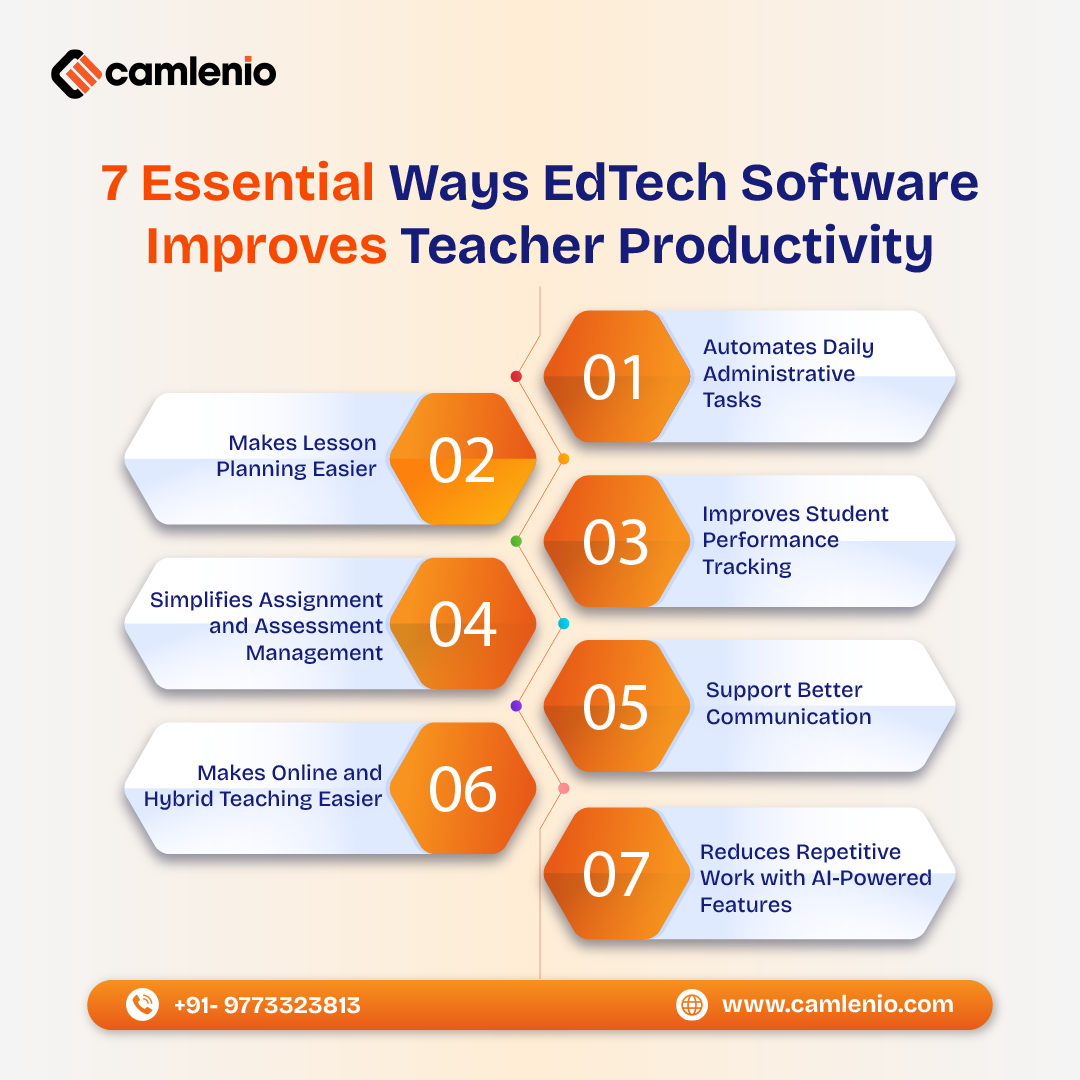
5. Support Better Communication
Features within the platform allow effective communication between teachers, students, and parents. Key features include:
- Instant notifications
- Notifications for students and parents
- Updates on assignments
- Discussion boards
- Online meetings
This means that teachers can effectively give key information to the class without using several different methods.
6. Makes Online and Hybrid Teaching Easier
Online/hybrid learning is now an essential part of modern education. Teachers benefit from using technologies to support teaching in this way. Modern EdTech Software allows real-time lessons, video recordings, digital resources, student attendance, and interactive resources. Teachers can run their lessons in a classroom. However, students can learn from multiple locations.
Students can also easily access educational resources at any time.
7. Reduce Repetitive Work with AI-Powered Features
AI will be a key tool within education in 2026. Quiz questions can be created, resources can be organised, lesson ideas suggested, and patterns in student learning can be identified using AI tools. If there is a pattern of students struggling with a certain concept, analysis tools can help teachers find this and create extra lessons.
These are not intended to replace teachers. They allow them to carry out regular tasks more efficiently.
Read Also:What is Fintech Software? A Complete Beginner’s Guide 2026
Why Do Educational Institutions Need Custom Edtech Software?
Depending on the type of institute, the software requirements may differ. While schools have several requirements like student attendance and exams, coaching centers may require virtual classes, student monitoring, and exam preparation. That is why many institutions consider Custom Edtech Software. Therefore, many institutes prefer Custom Software development.
You can get custom-made software for your educational needs from a trusted Edtech Software Development Company. This can be:
- Learning Management System
- Student Information System
- Online Testing
- Fee and Attendance Management
- Teacher and Student Dashboards
- Parent Portals
- AI-based learning tools.
By working with an experienced development partner or a custom software development company, you can easily design a system that suits your needs, budget, and future expansion.
What Should You Look for in Edtech Software in 2026?
Before choosing an educational platform, institutions should consider a few important factors:
Considerations:
- Easy to use: Can be easily used by teachers with little training.
- Reduces repetition: Reduces repetition in administration.
- Secure data: Personal information and data about student learning are secure.
- Mobile-friendly: Teachers/learners can easily access key features on different devices.
- Scalability: The platform will be scalable so that you can have more users and features added as the school expands.
Conclusion
By utilizing digital learning and AI tools in education, schools can save time and create a more efficient learning environment in 2026. With the right EdTech software in place, tasks such as lesson creation, testing, monitoring student progress, and improving communication can be made more efficient.
By investing in software solutions, educational institutions can create a more structured and efficient learning environment. Camlenio understands that in today’s modern businesses and educational platforms, implementing the right software solutions through a well-planned development approach can create useful solutions for new ideas within education.
FAQs
Q1. How can Education Technology Software Help Teachers?
Ans. Time-saving. For attendance recording, assignment creation, marking, reporting, and communication.
Q2. What are Key Features within Education Technology Software?
Ans. Learning, Testing, Attendance, student analysis, Online lessons, and Communication.
Q3. Can Education Technology Software Improve Student Performance?
Ans. Yes! Teachers can assess how well students are doing. They can also see where students may be struggling and offer extra help depending on their performance.
Q4. Why is Bespoke Education Technology Software Important in Schools?
Ans. The features can be modified to suit how the school operates, what students need, and how it is run.
Q5. How is AI Changing Education Software?
Ans. Using AI in lesson planning, testing, analysis, individualised learning suggestions, and administration can make teaching much more efficient.
Read Also: CRM Software: A Complete Guide For Buyers 2026